

You Don't Have to Trust Your Camera's Autoexposure
Plus: Equinox light show at the Lincoln Memorial, a Nikon manufacturing glitch, the best-selling camera you probably can't guess, and the fight to fix copyright registrations.

What I’ve Been Working On
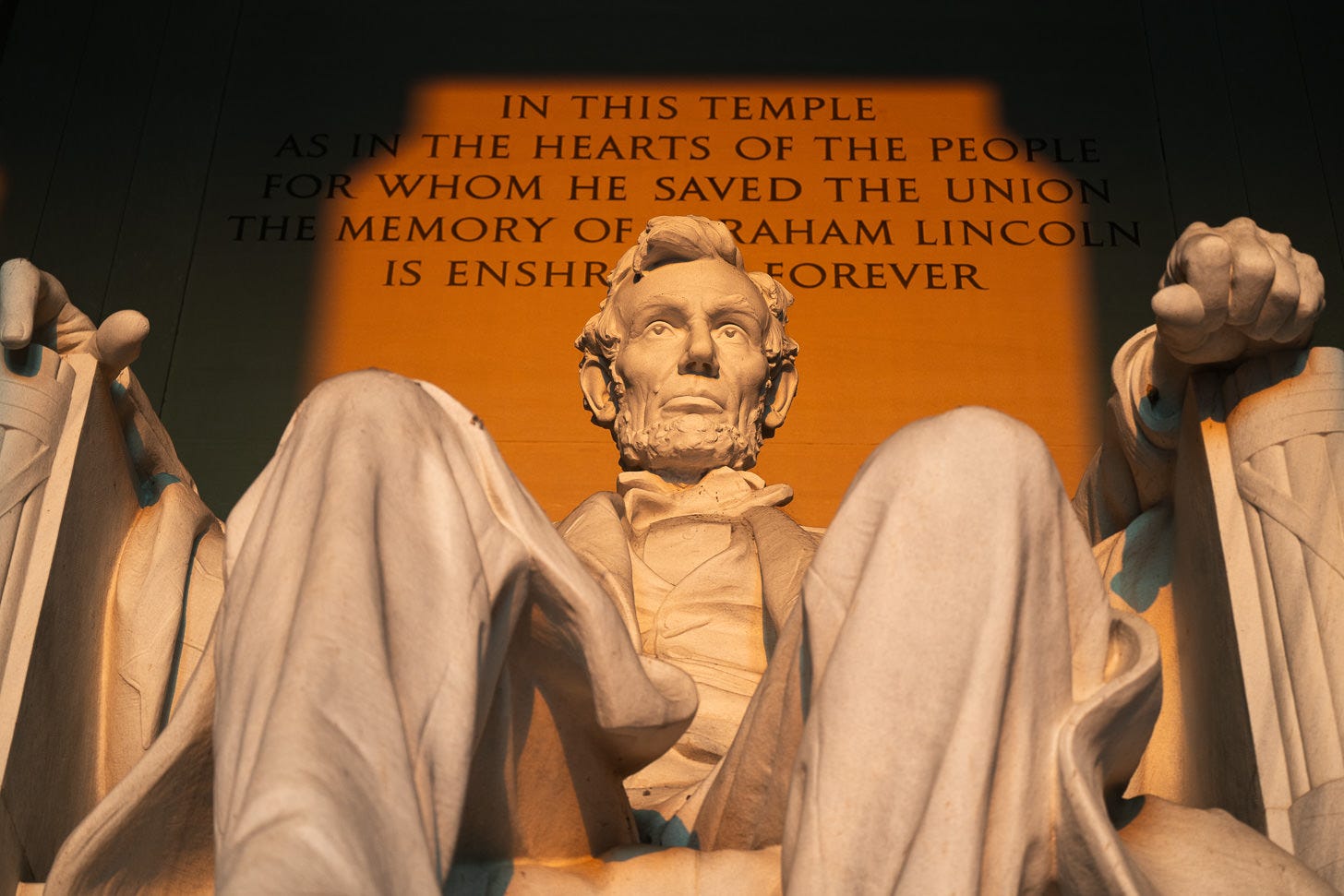
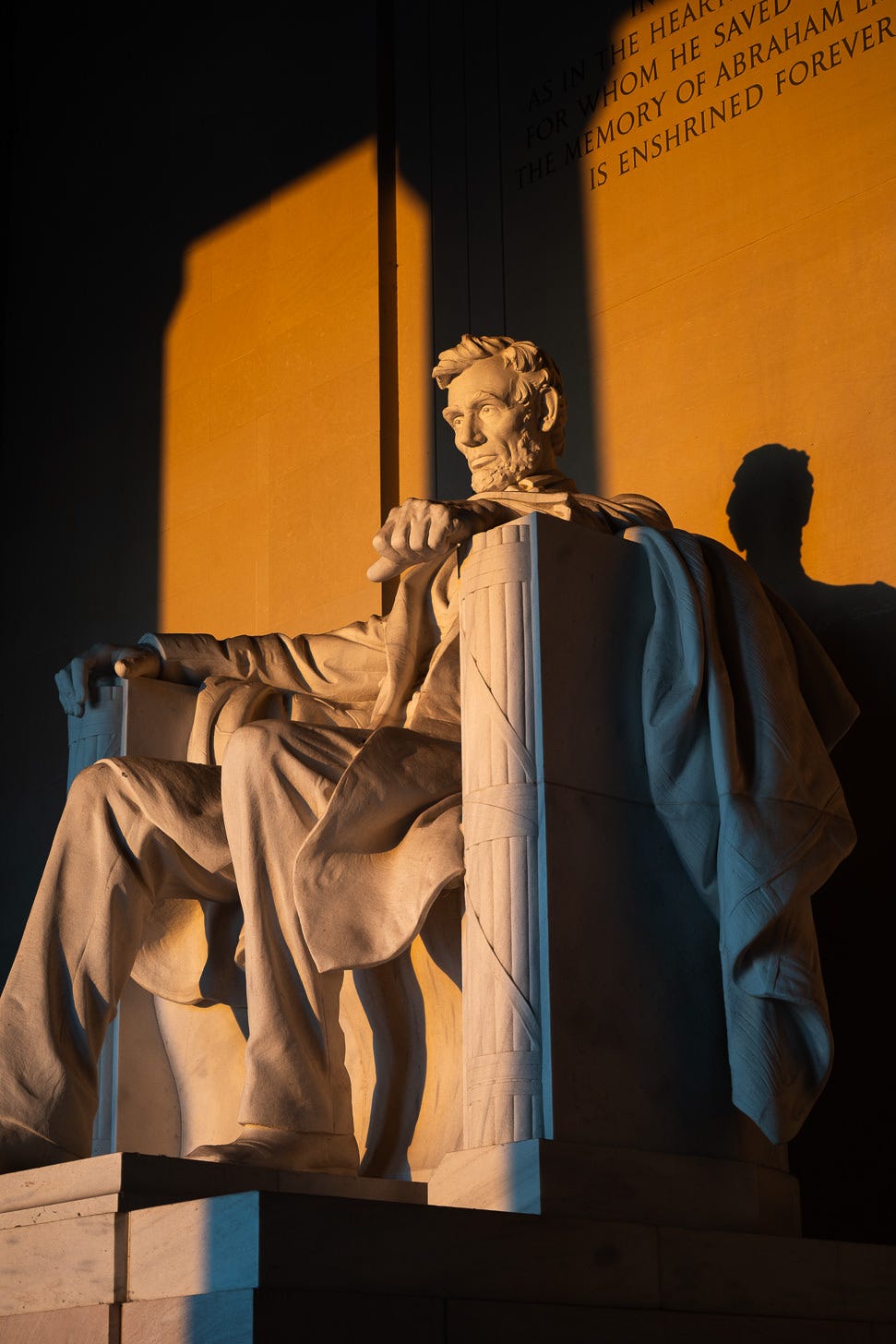
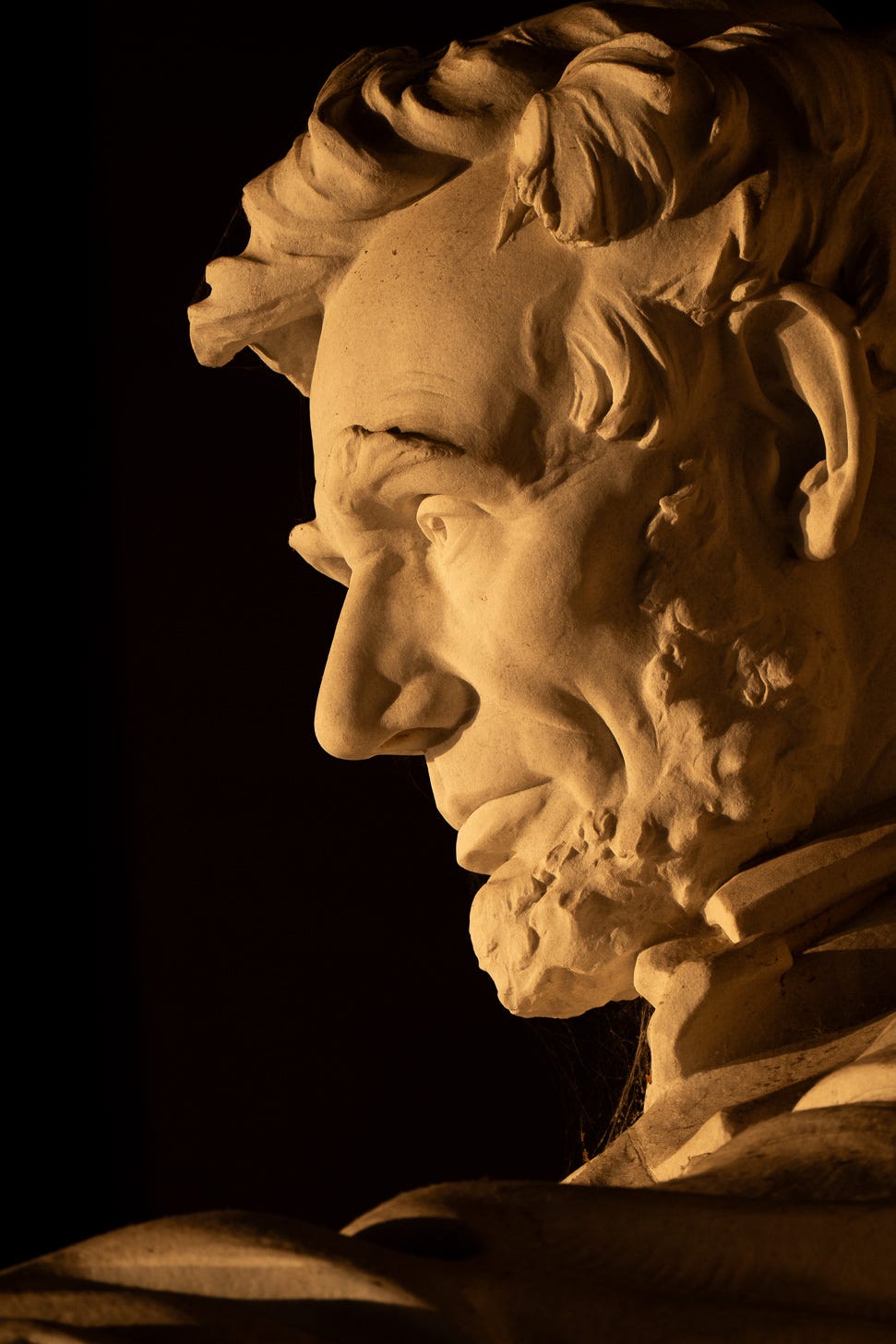
The spring equinox’s natural light show at the Lincoln Memorial (more on that below)
Lots of cherry blossoms. And saucer magnolias. And I have some really fun gear I’m testing out — more on that in next week’s newsletter.
I’ve added some new photography tools to my website and improved some that were already there:
You Don’t Have to Do What Your Camera’s Autoexposure Says
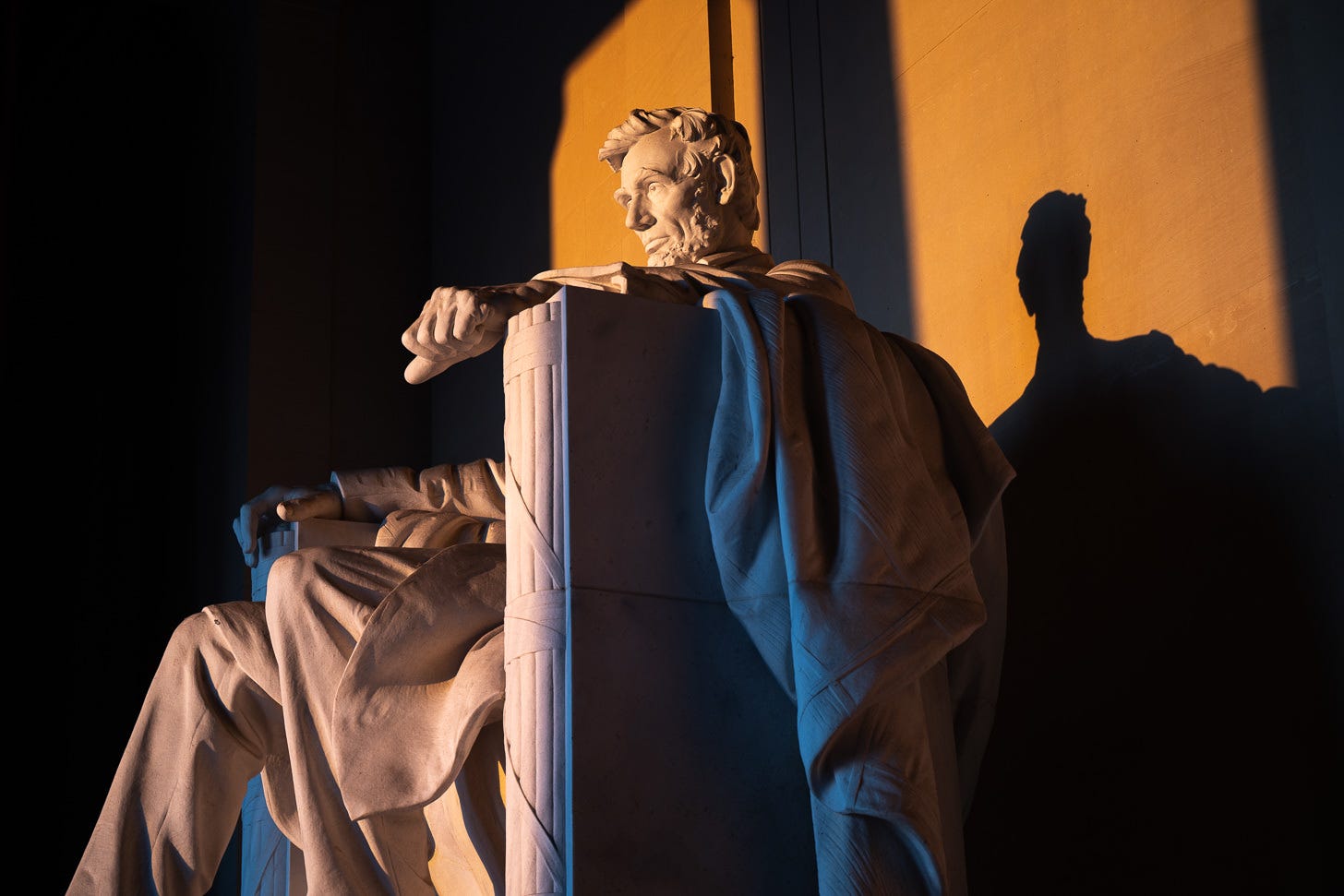
I was reminded of this once again when shooting the photos I’ve included here. I typically use aperture-priority mode when shooting, but in many shots I’m also using exposure compensation to override the camera’s auto exposure calculation. It’s a quick and very effective way to adjust the exposure on the fly without switching to full manual mode.
It’s convenient to shoot in P or A modes, but just because your camera’s autoexposure says it has chosen the “right” exposure, you don’t have to accept that.
Autoexposure is fundamentally based on averages. It’s trained on many thousands — perhaps millions — of images that teach it what the “right” exposure should be. But in tricky lighting conditions, it can be thrown off. Or, to be more accurate: it’s probably going to be thrown off. And what it considers the “correct” exposure simply might not match what you’re trying to create.
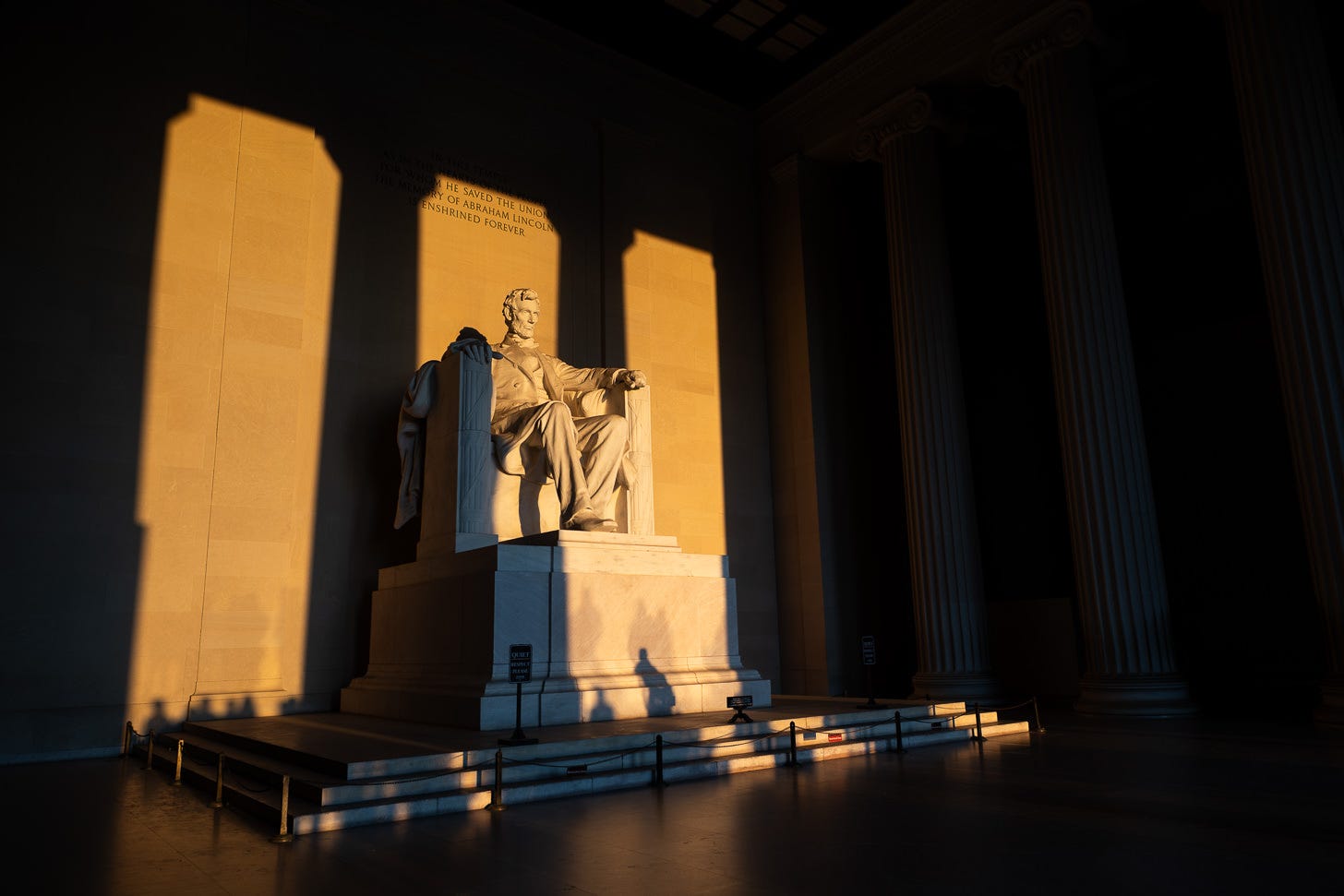
I use both under and over exposure compensation, but in the examples here, I relied heavily on underexposing what the light meter was saying. As it happens, the Nikon Z8 that I was mostly using is remarkably good with varied scenes of highights and shadows like this, but it still has a tendency to try to overexpose a bit in its attempts to bring up shadows. But in shots like this, I want the shadows to be dark — the whole point is making the highlights stand out. (Other good options are spot metering or highlight metering.)
Another benefit of slightly underexposing: it tends to make colors richer (and old trick from shooting slide film). In this case, it preserves the natural orange glow; overexposing will wash out the natural color.
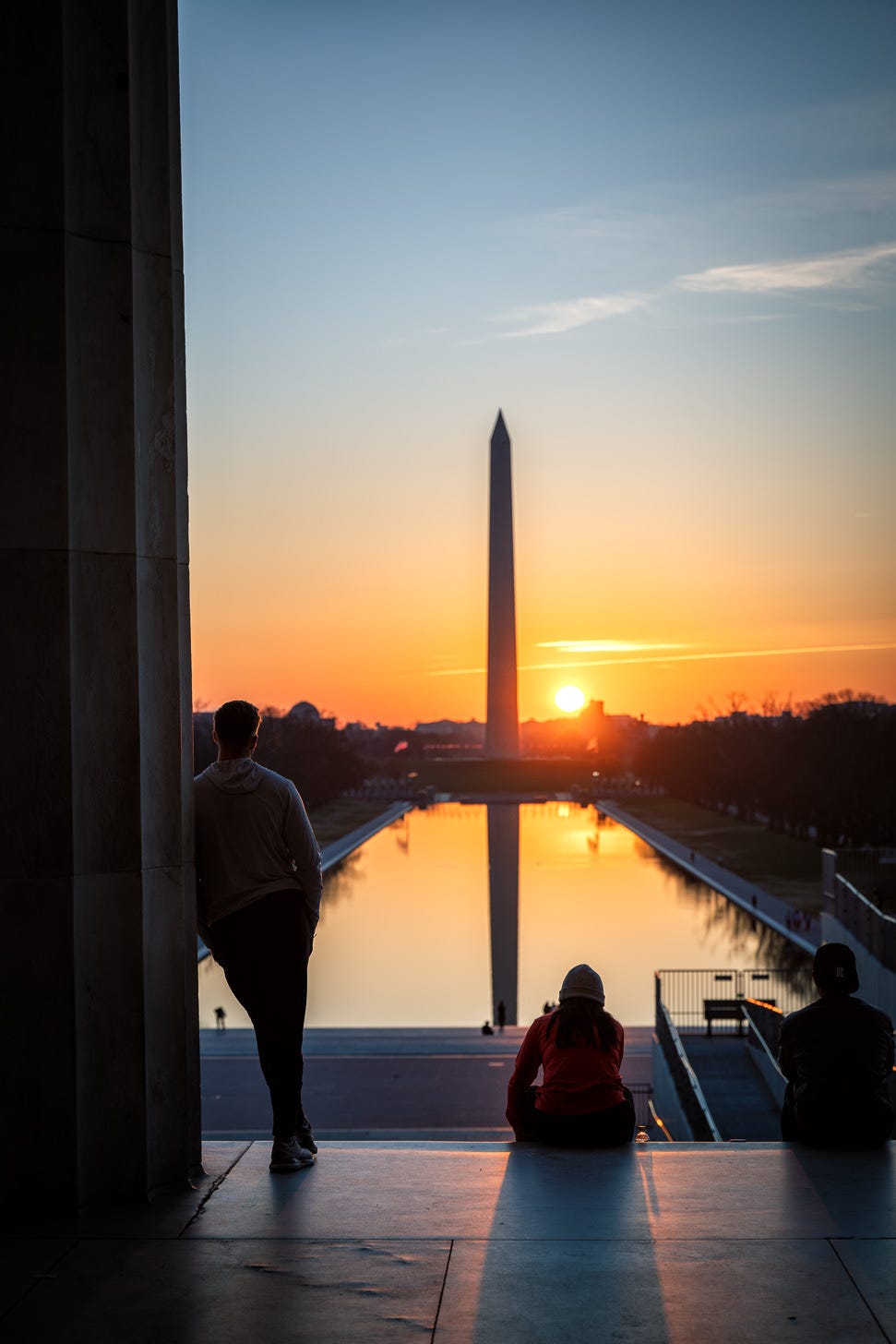
About these shots: These were all shot a couple of days ago, on the morning of the spring equinox. Because Washington, D.C.’s National Mall is aligned east-west, around the spring and fall equinoxes, the sun rises directly along it. And if you happen to get a clear sunrise, the sunlight will shine directly into the main chamber of the memorial, which is normally in deep shadow. It bathes the statue in golden light and casts some really sharp and interesting shadows. It only lasts a matter of minutes before the sun is too high to shine in. There’s no enhancement done to these shots — that’s how the scene actually looks. It’s a scene I’ve shot many times over the years, and it’s a good reminder to turn around even if everyone else is watching the sunrise.
Photography News
Nikon messed up. Nikon has apologized for a manufacturing problem affecting some Nikon Z6III, Z5II, and ZR cameras. Apparently, some substandard parts worked their way into the manufacturing chain. Nikon is offering free repair (and shipping). It doesn’t affect all copies of those models. You can see if your camera is affected by checking the serial number on Nikon’s site
I bet you can’t guess what the best-selling fixed-lens camera is right now. Fixed-lens cameras are all the rage right now. We hear a lot about cameras like the Fujifilm X100VI and the Ricoh GR IV. But guess who’s actually making the top-selling fixed-lens camera in Japan at the moment. And by a healthy margin, too. It’s Kodak!
The first-party lens tax is getting harder to justify. It used to be that buying a third-party lens was a calculated compromise — you saved money, but you usually knew you were taking a hit on autofocus reliability or weather sealing. That just isn’t a given anymore — while there are still misses, there are also many hits in the third-party lens options. The latest retail data out of Japan shows exactly how much the landscape has shifted. Tamron (23%) and Sigma (17.8%) are now actively out-selling Sony (13.1%) in the interchangeable lens market, with Canon and Nikon trailing even further behind. Of course, it doesn’t hurt that they make lenses for multiple mounts, but still.
The missing link for digital provenance. Working in dangerous places means protecting both physical safety and the digital security of the files themselves. In regions with heavy surveillance, encrypted, in-camera metadata signing (Content Authenticity Initiative standards) is becoming a literal lifesaver to prove provenance and protect photographers’ local sources and fixers. The bottleneck used to be that the standard press workflow would break that encrypted seal — either when generating a JPEG or when adding captions on deadline. But with Adobe integrating Content Credentials into Lightroom’s export, and Photo Mechanic finally rolling out full C2PA support last month, that encrypted chain of custody now survives the jump from the camera all the way to the editor’s desk.
Worth Seeing
From Shadow to Substance: Grand-Scale Portraits During Photography’s Formative Years (Smithsonian National Portrait Gallery, Washington, D.C. / through June 2026). This is a fantastic, highly technical look at the physical evolution of early photography. It traces the shift toward grand-scale, whole-plate portraits — specifically looking at the transition from high-end daguerreotypes to mid-range ambrotypes and affordable tintypes. And it’s not just the images — the exhibit also goes into detail on the behind-the-scenes of producing these images. You can read more about it here.
The artist behind JFK’s camelot. Blind magazine has a great feature on Jacques Lowe, JFK’s personal photographer. I’ve spent some time on things JFK, and there are some shots here I hadn’t seen before. It’s paywalled, but it’s a high-quality photography magazine (online) that you might want to subscribe to (or sign up to their newsletter).
Good to Know
Is AI-assisted image editing compatible with copyright protection?
The U.S. Copyright Office set a firm boundary in its 2025 policy report: “human authorship” remains the absolute baseline for protection. Practically, this means using editing software to assist the workflow, like AI Denoise or Generative Expand, doesn’t strip away legal ownership — the underlying creative expression of the photograph is still yours. However, images generated primarily from text prompts are considered machine-authored and remain uncopyrightable. I’ll be curious to see how this impacts AI-generated video and movies.
And on that topic . . .
There are efforts to increase the 750-image limit per copyright registration. It used to be that you could upload tens of thousands of images in a single filing, if you wanted to. But since 2018, the Copyright Office has imposed a limit of 750. For high-volume shooters, there is some hope on the horizon — a bipartisan bill called the Visual Artists Copyright Reform Act (VACRA) is actively trying to force that limit up to 3,000 images. Until (if) that passes, though, we’re still dealing with the reality of the lower cap, and the Copyright Office still remains woefully understaffed.
Fun to Know
The first digital camera was the size of a toaster.
Speaking of Kodak . . . In 1975, a 24-year-old Kodak engineer named Steven Sasson invented the world’s first self-contained digital camera. It weighed 8 pounds, shot at 0.01 megapixels, and took 23 seconds to record a single black-and-white image onto a Philips digital data cassette — not a standard audiocassette, but a specialized tape used for recording digital instrumentation data. When Sasson demonstrated it to Kodak management, their response was essentially: that’s cute — but don’t tell anyone about it. The company declined to commercialize it, wary of what it might do to film sales. Kodak filed for bankruptcy in 2012.