

Why You Only Need to Buy One Polarizer Filter
PLUS: My Fujifilm GFX100RF review posted, film is still very hard to make, and shots from northern Laos.

The One-Filter Trick That Saves You Money and Gets You Better Glass
A circular polarizer is one of the few filters that truly earns its place in the bag. It cuts glare, wipes reflections off water and glass, deepens blue skies, and saturates color — all optically. And here’s the kicker: it’s an effect you genuinely can’t fake later. Software can darken a sky, but it can’t strip the reflection off a pond or a shop window. Only the filter on the front of your lens does that.
The catch is that good polarizers aren’t cheap — and if you look in your bag, your lenses probably take all different thread sizes. 77mm here, 67mm there, 58mm on the nifty fifty. Buy a quality polarizer for each one, and the cost climbs fast.
But there’s another way that gets you better quality and saves you money at the same time: buy one polarizer — the best you can afford — sized to your largest lens.
For most kits, 82mm is the safe bet; it’s what the pro f/2.8 zooms take, so you’re future-proofed. Then grab a handful of step-up rings, which are dirt cheap, to adapt that one filter down to every smaller lens. One good filter, a few little rings, every lens covered.
This isn’t some hack I dreamed up — photographers have economized this way since the film days. Filter makers just don’t advertise it, because they’d rather sell you four filters than one.
And since you’re only buying one, it’s worth buying a good one. Cheap polarizers often aren’t truly neutral — they can throw a bluish cast and quietly mute colors — and there’s not much sense bolting a bargain filter onto a lens you paid good money for. Look for high-transmission glass, quality coatings, and brass rings that won’t seize up on a cold morning.
That’s the whole strategy: fewer, better filters. One excellent polarizer will outlast and outperform a drawer full of cheap ones — and cost you less.
What I’ve Been Working On
I’ve posted my hands-on review of the Fujifilm GFX100RF medium-format camera.
I’ve been building out some custom Lightroom plugins to help with my own workflow in managing image metadata. Many of these aren’t for wider distribution, but they’re proving extremely useful in improving and organizing the metadata in my archive of tens of thousands of travel photos. I also plan to release a subset of them here for paid subscribers to this newsletter.
Wide Angle
Instagram now lets you reorder the thumbnails on your profile grid.
Apple is going all in on AI photo editing, moving further away from reality. I’m going to wait for the backlash.
Old film archives, rediscovered. As someone who has spent more than their fair share of time working with image archives on both sides of the process, I love it when old collections get rediscovered, digitized, and shared. Three this week that caught my eye:
Archival photos from 1972 recently revealed a massive, 550-hectare kelp forest off the Canadian British Columbia coast that vanished by 1984 — proving the ecosystem collapsed decades earlier, and was ten times larger than scientists previously thought.
Danish archivist Peter Deleuran spent five years digitizing and restoring roughly 300 WWII glass negatives long presumed destroyed in the London Blitz. He has successfully returned the recovered images to their original Planet News archive and chronicled the rescue in his book, Reflections of War.
An Arlington County library has digitized about 3,000 local photos from the 80s and 90s from their archives. And as a DC-adjacent area inside the Beltway, there are some nationally significant gems in there.
New exhibition at the International Center of Photography in New York: Yves Saint Laurent and Photography.
The lens does the thinking. Right now, cameras rely on internal computer chips to run AI tasks like subject recognition after the light hits the sensor. Researchers have just built a prototype "smart lens" that does this processing directly in the glass itself—meaning the lens figures out what it's looking at before the camera even records the image, which could eventually mean instant autofocus with almost zero battery drain.
Film might be old technology, but it’s still very hard to make. Light Lens Lab — the Chinese outfit best known for meticulously cloning vintage Leica lenses — has been trying to become a film manufacturer too, and to their credit, they published an unusually candid progress report. Turns out it’s exceedingly difficult to make your own emulsion from scratch. Worth reading just for the honesty about how genuinely hard the “film revival” is to actually manufacture.
About Today’s Photos
Laos doesn’t often make the news here, but two Laos-related stories have caught international news attention in the past few weeks. One was the cave rescue.
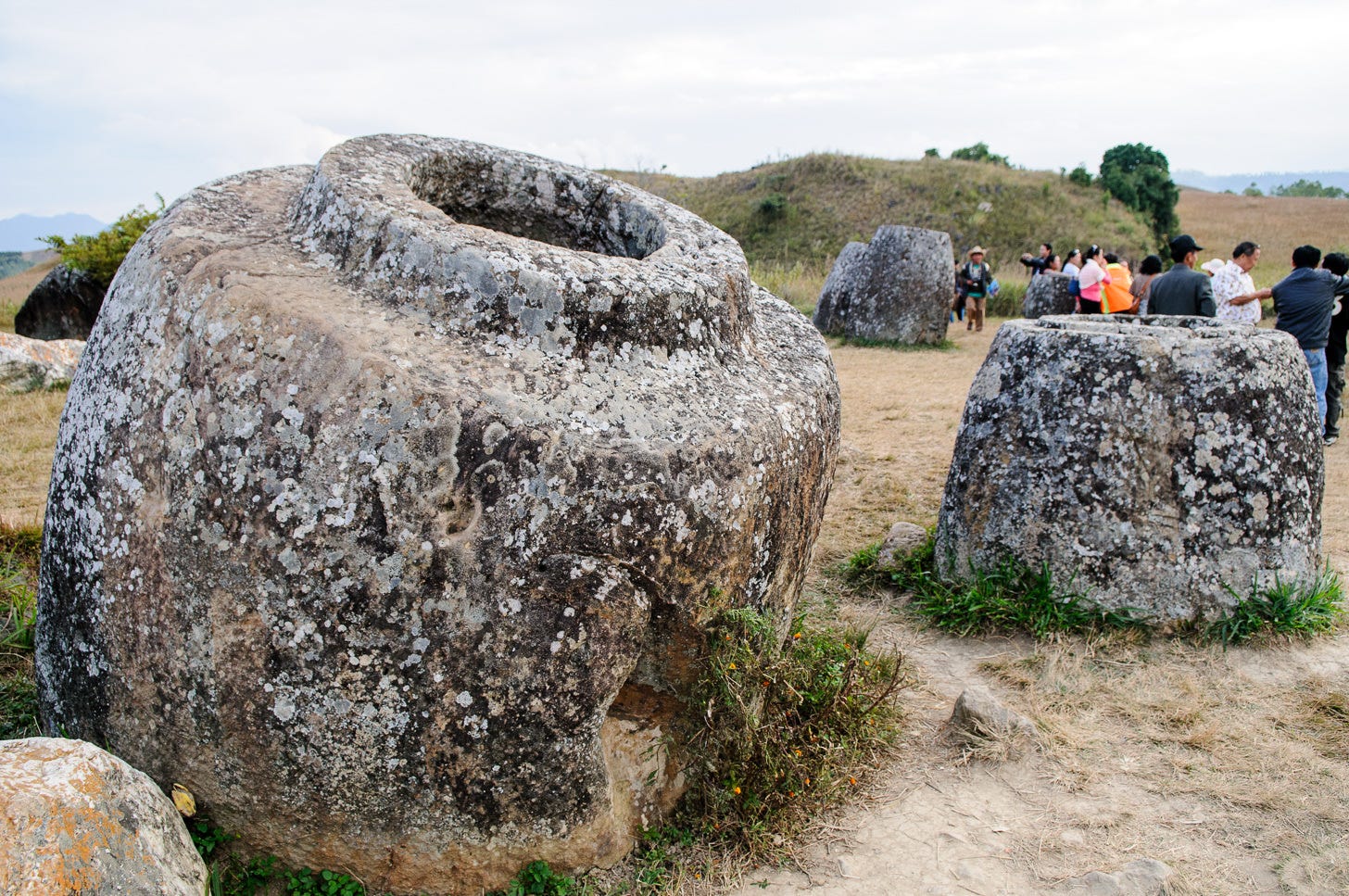
The other was an archeological dig. The large stone jars scattered across northern Laos have remained mostly a mystery since they were first brought to the West’s attention in the 1930s. There’s no written record, and it’s not entirely clear how they were used. Making it far more complicated: the legacy of the Vietnam War, with massive amounts of unexplored ordnance from the United States’ secret bombing campaign in Laos still littered through the whole region.
Who put them there and why has been debated for a long time. There’s long been a local tradition that a mythical race of giants once stored rice wine brewed to celebrate a victorious ancient king. But archeological excavations over the past century have pointed to a different use: that the jars played some roll in funerary ceremonies, even thought it’s still not entirely clear how. New discoveries announced in the past few weeks by a team led by an Australian archeologist lend weight to the contention that they were used in a kind of secondary funerary ceremony long after death.
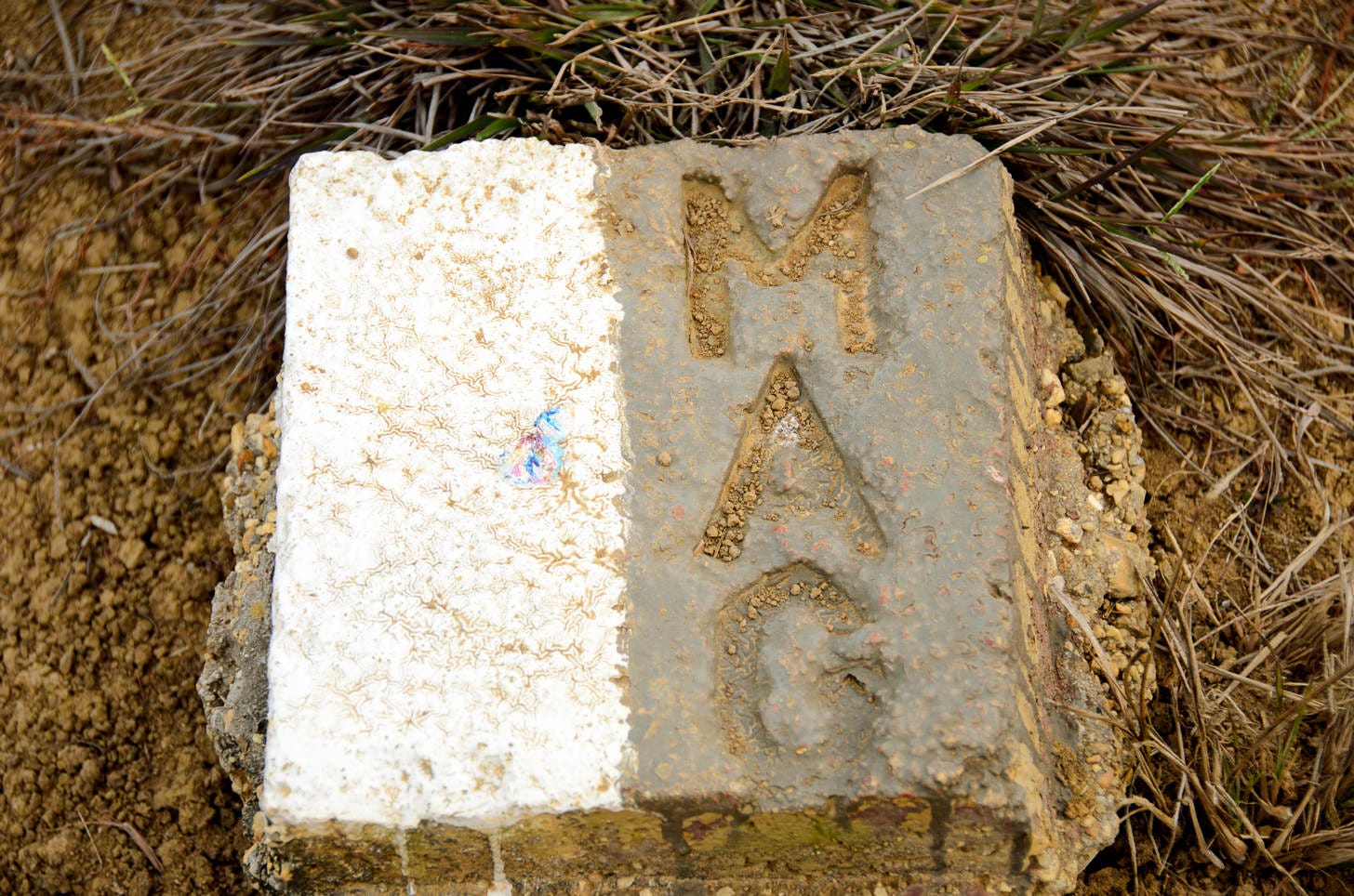
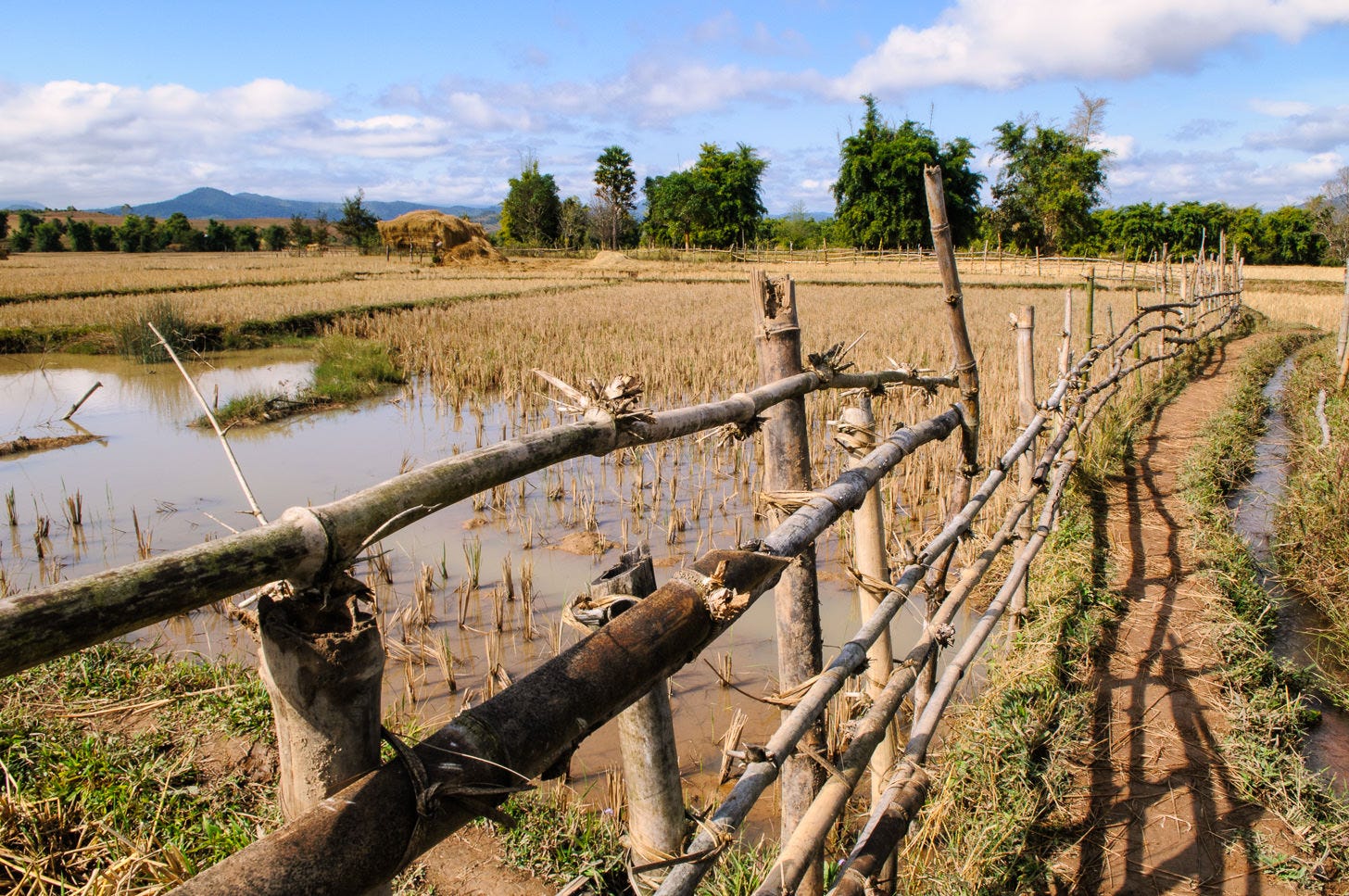
I visited this area several years ago; these shots were taken then. The stone jars are basically just lying around the countryside, a region still pockmarked by craters from B-52 bombs. And yes, you really do want to take careful note of those MAG markers showing where it’s safe to walk.

Photographers at Work
A very sad situation, but I appreciated this excellent photojournalism by Arlette Bashizi from inside the Ebola outbreak in the Congo.

Fun to Know: A 3-Year-Old Toddler Inspired the Polaroid Camera
In 1943, inventor Edwin Land took a photo of his three-year-old daughter. She impatiently asked him why she couldn’t see the picture immediately. Struck by the question, Land went for a walk and conceptually solved the mechanics and chemistry required within an hour — giving birth to the Polaroid instant camera.