

Why You Don’t Want to Buy an SD Express Memory Card
Plus: New gear, and photography exhibits worth catching.


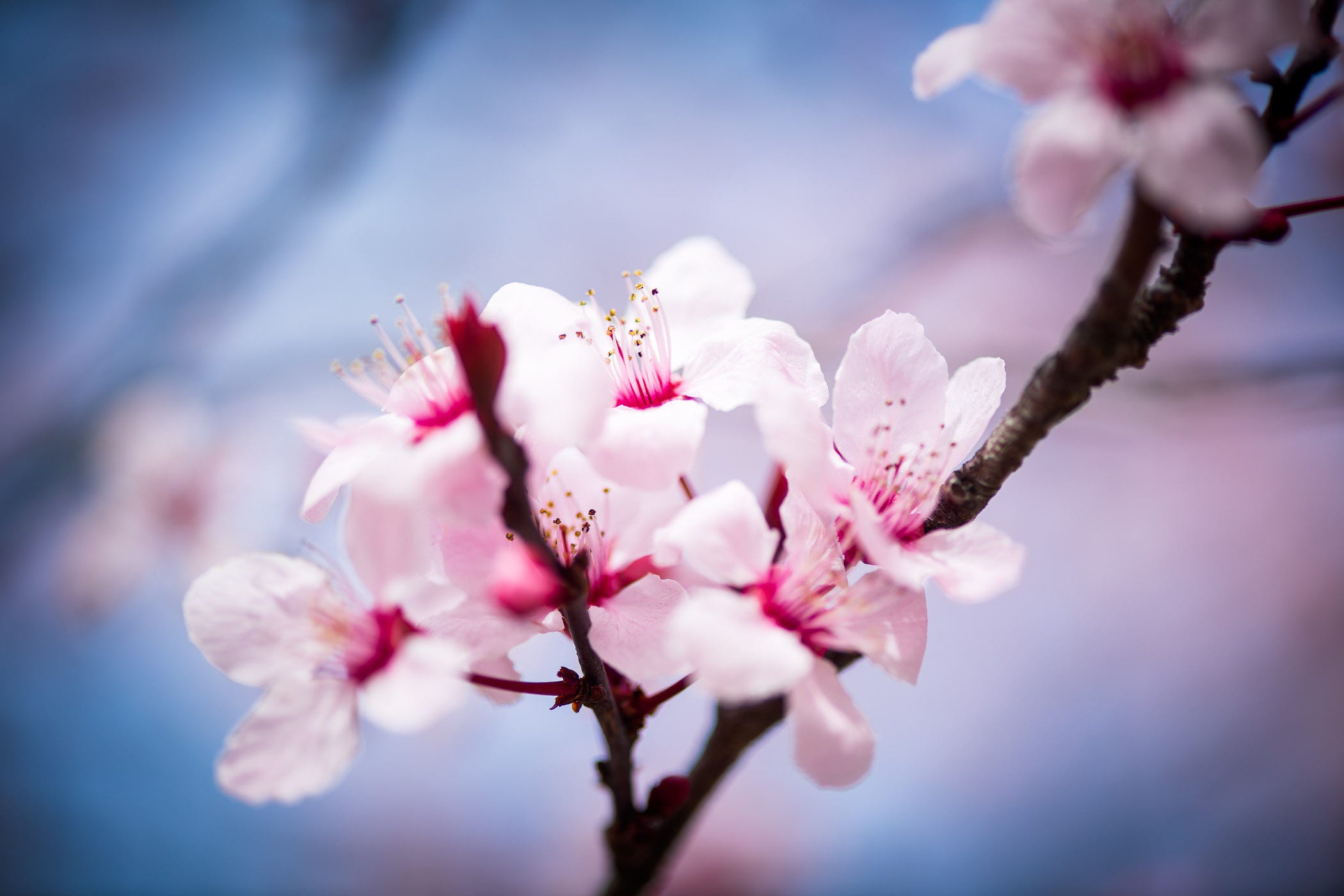
Today’s photos: Spring has felt a long way away recently. So I thought I’d splash a little floral color for those who might be getting a bit tired of all the snow and ice.
Why You Don’t Want to Buy an SD Express Memory Card
SD Express and microSD Express cards have started hitting the market. But don’t buy one for your camera.
Sure, SD Express sounds like they’d be faster. And they are. Blazing fast speeds using the same PCIe technology found in computer SSDs. Even faster than UHS-II.
But they’re only faster if your camera specifically supports it. And your camera doesn’t — no current cameras do. An SD Express card will fit in your camera’s SD card slot, and it will work in your camera. But only sort of — it’s currently a trap.
That’s because the way they maintain backward compatibility means that you might end up with a card that performs slower than if you’d just gotten a UHS-II card.
To achieve those super-fast speeds, SD Express cards physically repurpose the second row of pins that UHS-II uses. This creates a nasty compatibility issue. If you stick an SD Express card into a modern UHS-II camera (like a Canon R6 II, Sony A7 III, Nikon Z5, or Fujifilm X-T5), it cannot fall back to UHS-II speeds. Instead, it throttles all the way down to sluggish UHS-I speeds (max 104 MB/s, but you might see less).
So you could pay a premium for “next-gen” technology only to get significantly slower performance than the cards you already own.
Unless you have a device specifically built for SD Express (and, right now, that’s only the Nintendo Switch 2 gaming system and some memory card readers), stick with UHS-II cards for now.
The Upshot: Buying an SD Express card for a current camera is a waste of money because you are paying for speed your camera cannot access, while simultaneously losing the UHS-II speed tier your camera can access.
Gear
New Canon wide-angles: RF 14mm f/1.4 and RF 7-14mm f/2.8-3.5 L Fisheye STM. The 14mm, in particular, is making quite a splash.
The company that used to be Olympus has released the OM System OM-3 tuned specifically for astrophotography. Its sensor is especially specced to create clear images of nebula and other celestial scenes.
A firmware update for the Ricoh GR IV has added an electronic shutter option of 1/16,000 of a second. While not as fast as some high-end mirrorless cameras, it’s mighty quick for a small compact like this.


Wide Angle
Photography charity. If you’re looking to contribute, check out 100Cameras. It’s a small but worthy charity aimed at empowering youth with all the good things about photography.

Photographers at Work
I’m always amazed at the stunning photos that come out of the Olympics. It’s not just the emotion and intensity and colors of the subjects themselves. The athletes are inspiring, to be sure, but I also find it inspiring how good the photographers are, especially operating within the access constraints they deal with — they just find so many inventive ways to get a different perspective and framing. With the Winter Olympics running right now, amazing imagery is all over the place, but for some tightly curated collections, check out Getty Sports on Instagram and the running galleries maintained by the New York Times and CNN.

What’s Showing / Photography Exhibits
These look well worth catching if you’re in the neighborhood:
Boston: First Look 2026. Through April 27.
Paris: Martin Parr: Global Warning. Through May 24.
London: Boris Mikhailov: Ukrainian Diary. Though February 22.
Amsterdam: Blommers & Schumm: Mid-Air. Through February 22.
Love the various blooms scattered through your post.