Why “Infinity” on Your Lens Isn’t Actually Infinity
PLUS: A million negatives saved from the silver furnace, Tamron's 17-70 finally comes to Canon and Nikon, and some photos from last night.

Don’t Trust the Infinity Mark When You Focus Manually
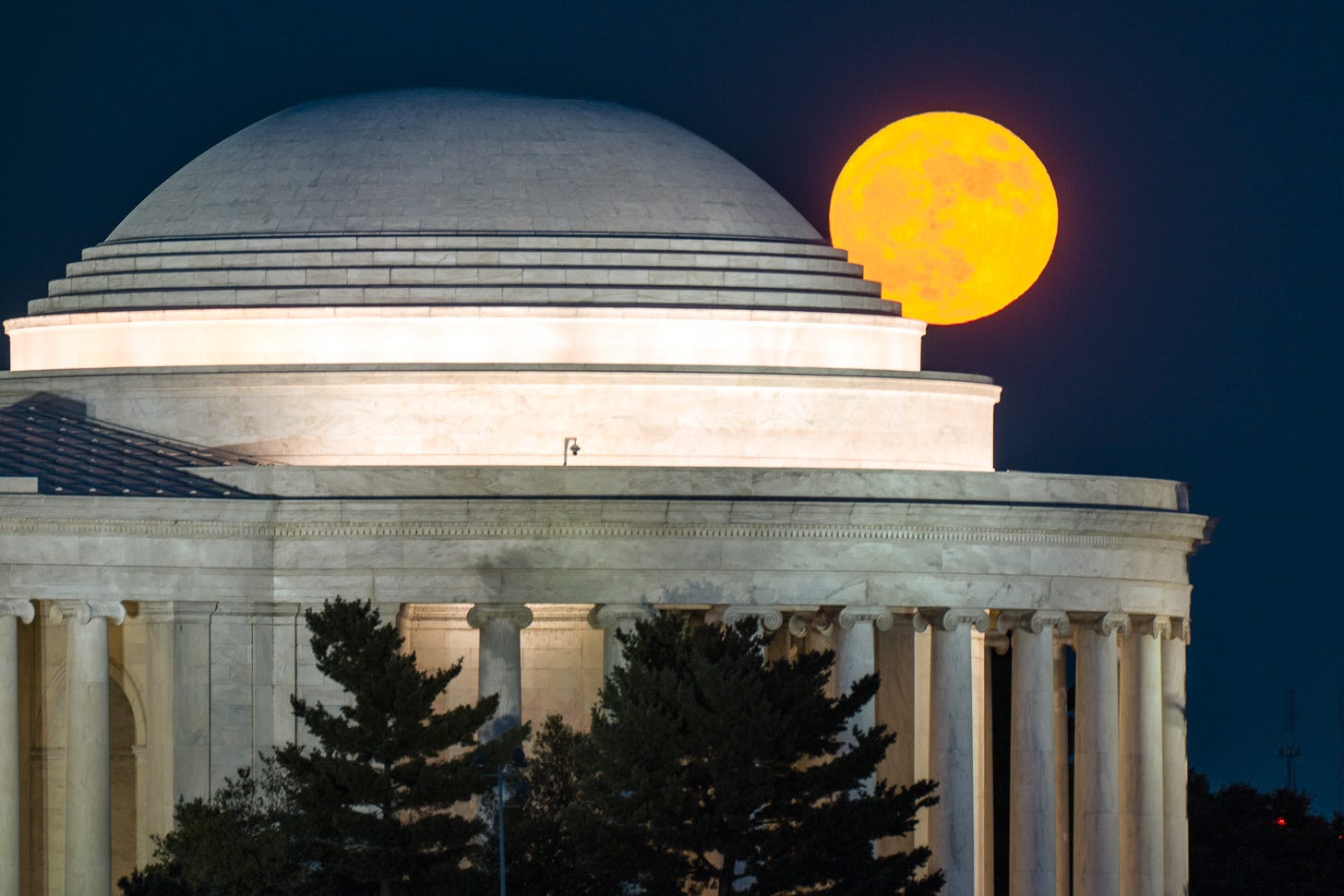
I was reminded of this last night, shooting the full moon rising over the Jefferson Memorial with the wonderful people at Washington Photo Safari.
When you switch your lens to manual focus, it seems perfectly logical: if your subject is far away — and the moon certainly counts as far away — you’d just turn the focus ring as far as it goes.
But that hard stop will give you blurry photos. Which is exactly what you were trying to avoid.
Here’s the catch: infinity isn’t actually infinity.
That mark is really just an approximation, so most lenses are deliberately built to focus a little past it. The extra travel is there so you can still reach true infinity despite the tiny manufacturing differences between individual lenses — and even as a change in temperature subtly shifts the glass inside. So when you crank the ring all the way to its hard stop, you sail straight past sharp.
Do this instead: let autofocus lock onto your subject, then flip the lens (or camera) over to manual focus to hold it right there. Just don’t nudge the focus ring again afterward — and that includes fiddling with a lens hood or screwing on a filter.
So why not just trust your camera’s manual-focus aids in the viewfinder rather than start with autofocus? On older cameras, the focusing scale worked great. But in my experience, the manual-focus tools on a lot of modern cameras are afterthoughts — they’re simply not as precise as you’d want them to be because the cameras lean strongly into the perfectly logical expectation that most users will be using autofocus.
Wide Angle
Canon and Nikon’s walled gardens open another crack. Tamron has announced its 17-70mm f/2.8 APS-C stabilized zoom — a lens that’s been around for years on Sony and Fujifilm but had been off-limits to Canon and Nikon due to restrictions for third-party lenses. It goes on sale later this week for $749.
Fifty years, fifty states, no copyright. Carol Highsmith has spent half a century driving America’s highways photographing the country and handing every frame to the Library of Congress with no copyright and no strings attached. She’s now reached her goal of documenting all fifty states (plus DC and Puerto Rico). You can trace her visual journey on a map put together by the LOC.
A million photographs, rescued from the silver furnace. Around 2009 a French collector named Thomas Sauvin noticed that a recycling plant on the edge of Beijing was buying up people’s discarded film negatives — not to keep them, but to dissolve the emulsion for the trace of silver in it. He started buying them back by the kilo instead, and seventeen years later the archive holds more than a million images: strangers’ weddings, first cars, seaside trips, the whole texture of everyday Chinese life from the 1980s to the early 2000s.
Another holiday; another reason for big discounts on camera gear. There are some really impressive discounts on cameras and lenses this week for July 4 at B&H.
A pixel with a twist. Phase-detect autofocus — the fast kind in every modern camera — works by splitting each pixel left-and-right so it can compare two slightly different views and judge focus. The catch is that a left-right split reads vertical edges beautifully and goes nearly blind on horizontal ones, which is why cameras sometimes hunt on a flat horizon or a low-contrast wall. A new Canon research paper stacks two photodiodes inside a single pixel and rotates one of them 90 degrees, so every pixel reads focus equally well in both directions — true cross-type, all-pixel, “all-directional” AF on a 3D-stacked sensor. It’s a lab paper, not a shipping product, but if it reaches a real camera it would mean steadier focus on exactly the textures that trip today’s bodies up.
Photographs of places Van Gogh actually stood. In 1922, the critic and early Van Gogh biographer Gustave Coquiot toured France photographing the real locations the painter worked in — the Yellow House in Arles, the Langlois bridge, the asylum at Saint-Rémy. The albums then disappeared for a century but have now resurfaced. Because so many of the original locations have been built over in the time since, these are sometimes the only visual record or what Van Gogh saw.
Today’s Photos
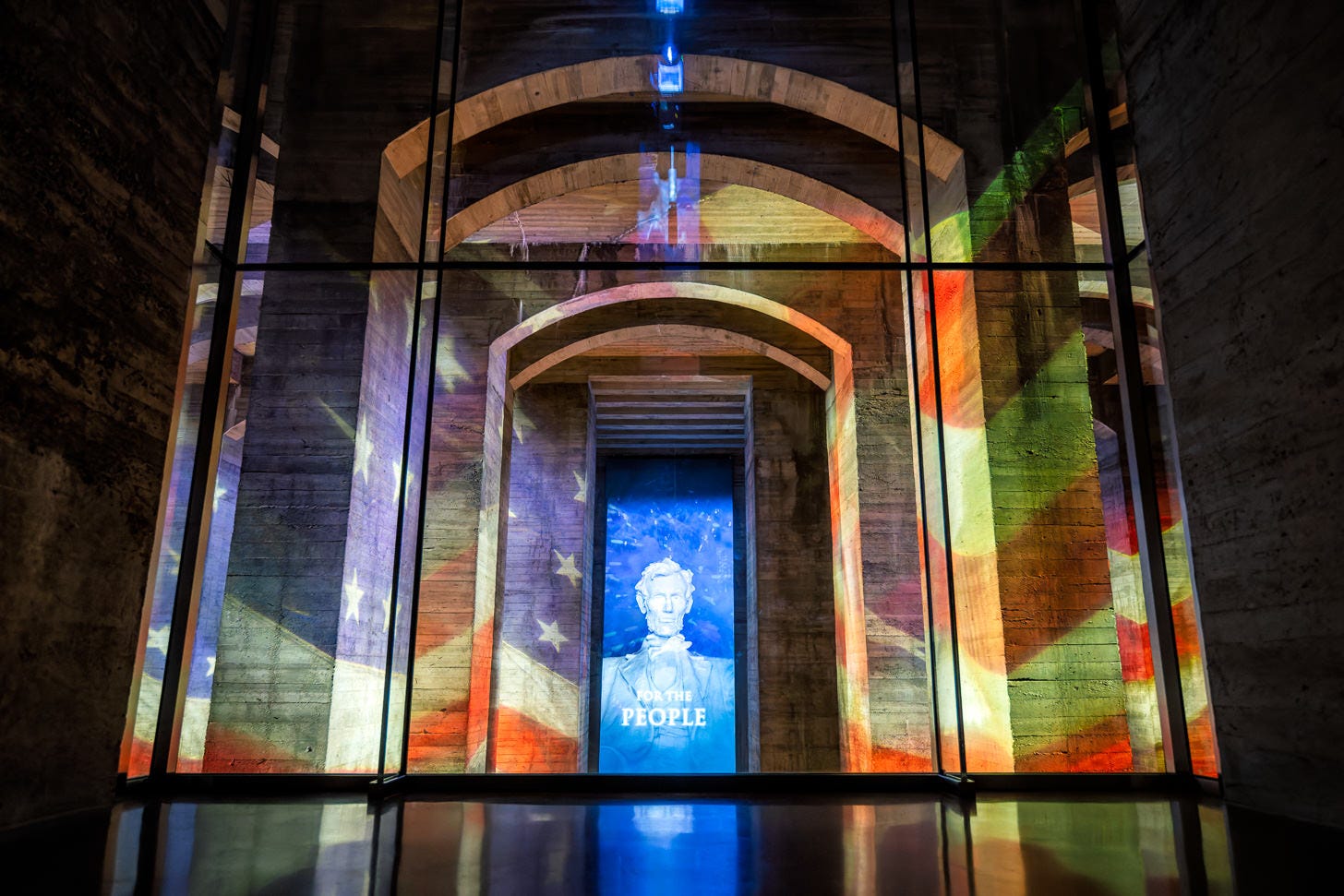
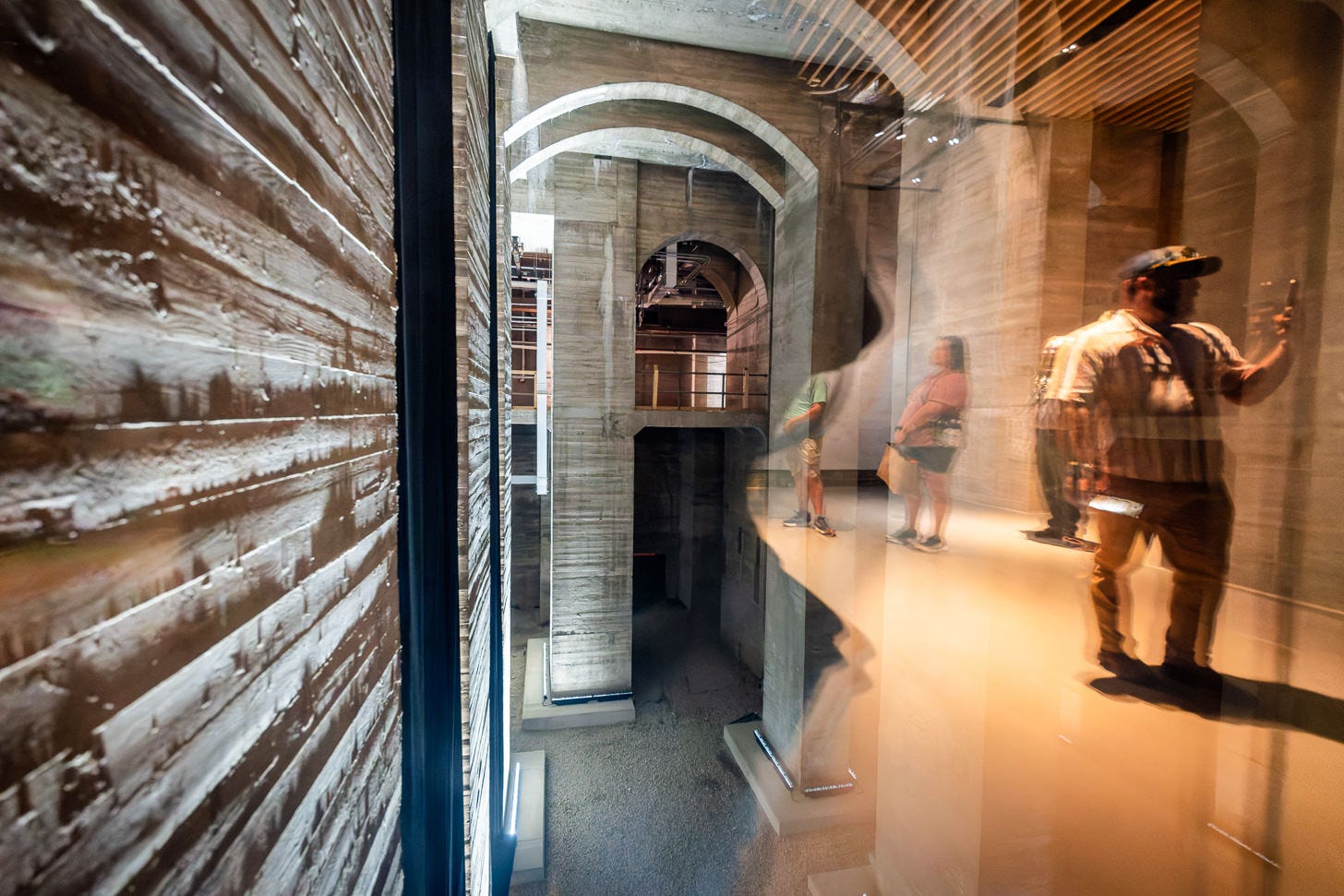
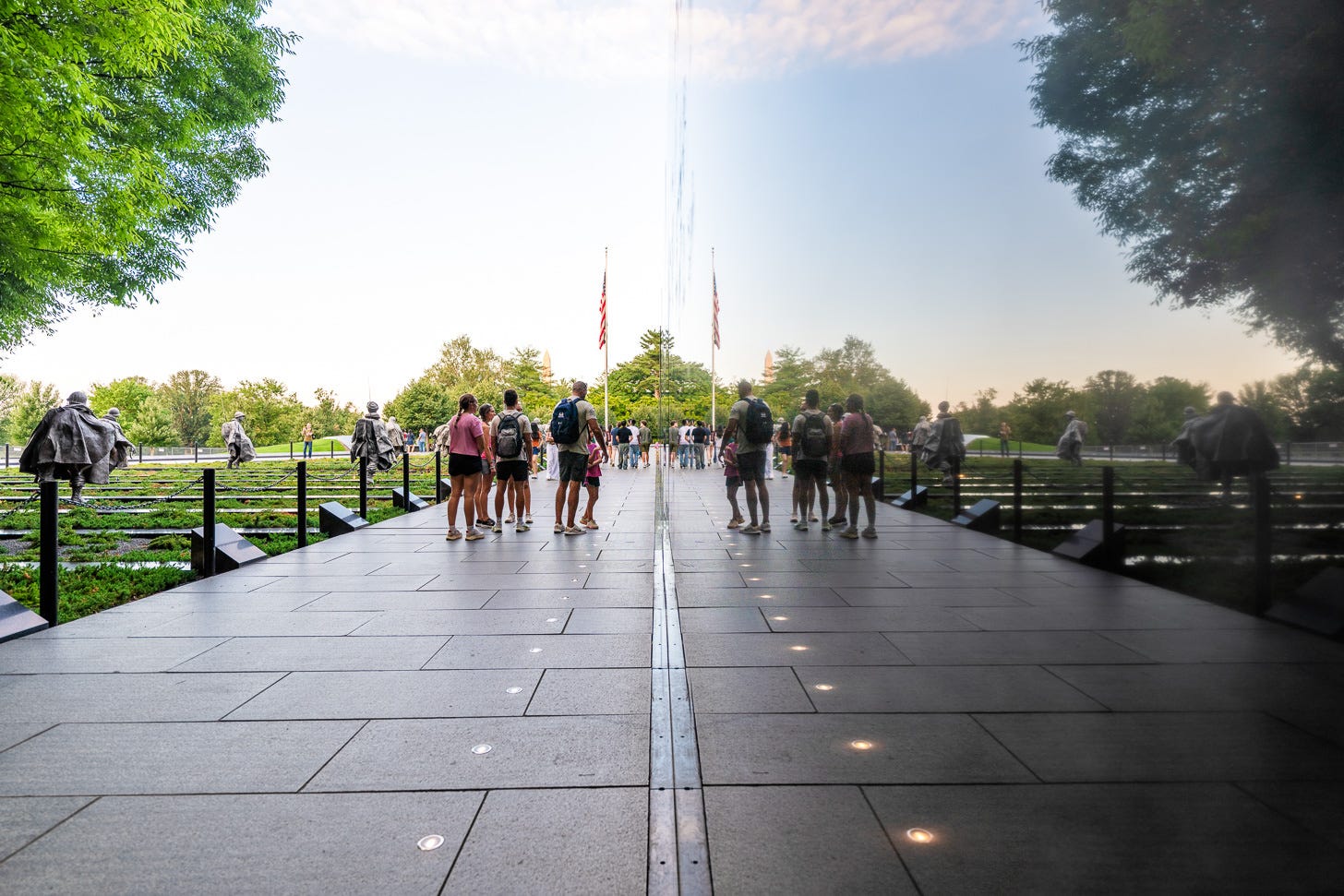
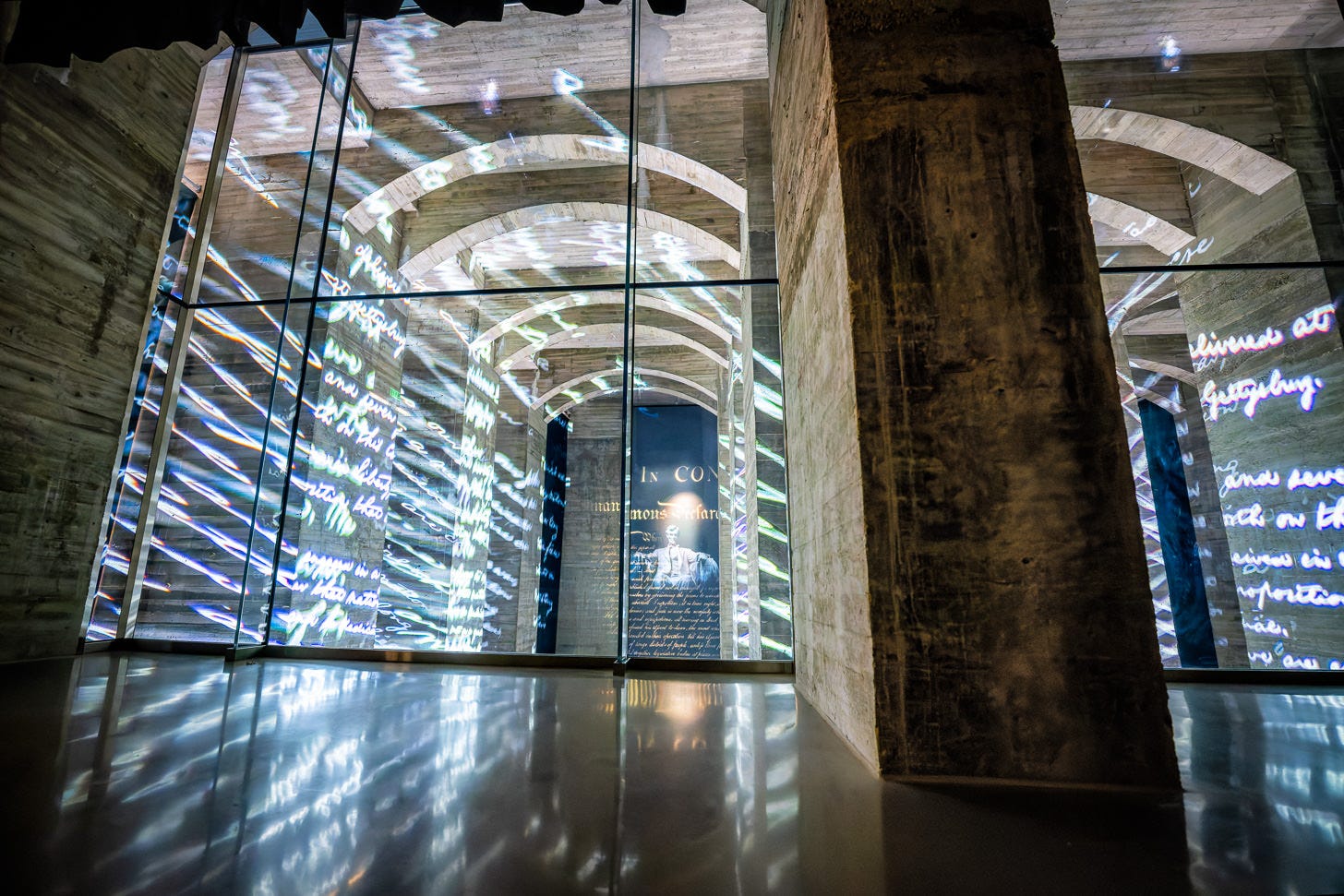
Well, these are more accurately “last night’s photos.” I took them all last night: at the newly opened Lincoln Memorial Undercroft, the Korean War Veterans Memorial, and the full moonrise over the Jefferson Memorial. It was a lovely evening for it!
And if you want to shoot the moonrise yourself, Washington Photo Safari heads out there every month — you can find the schedule here.
Fun to Know: We Now Take More Photos Every 2 Minutes than the Entire 19th Century
The sheer volume of consumer photography has reached mind-boggling scales. Thanks to smartphones and digital cameras, humanity currently takes an estimated 1.8 trillion photographs every single year. To put that scale into perspective, statistics show that we now take more photographs every two minutes than all of humanity captured throughout the entire 1800s combined.