Why f/22 Can Work Against You — And When It’s Worth It
Plus: Panasonic’s new retro compact, a (probably) $10K Nikon zoom, and why there are 12 Hasselblads on the moon.

Using a lens wide open at its largest aperture (or the smaller number, like f/1.8 or f/2) usually isn’t ideal if you want maximum sharpness. You need to stop down a bit first (something like f/5.6 or f/8).
So it’s tempting to think that smaller is always better. Keep going to f/22, get even sharper results. Right?
Unfortunately, it’s not quite that simple.
Past a certain point — roughly f/11 on a full-frame camera, f/8 on APS-C, although it varies by the lens — you’re no longer fighting optical aberrations. You’re fighting physics.
Diffraction causes light to bend as it squeezes past the aperture blades, spreading what should be a sharp point into a soft blur. The smaller the aperture (ie, the higher the number), the worse it gets.
That said, shooting wide open isn’t wrong. Chasing absolute sharpness can become counterproductive. And most of the time, I like to shoot wide open or close to it. When I need sharpness across the whole frame, I shift to something like f/8 or f/11. I rarely go smaller than that without a specific reason, like if I’m shooting cherry blossoms close-up while also trying to get the Jefferson Memorial in reasonable focus; in that case, I might shoot at something like f/22 or f/32.
But shooting at f/22 or f/32 can come with annoying downsides.
One is the sharpness issue. But there’s another good reason not to shoot at the smallest aperture your lens can do: dust spots.
At wide apertures, sensor dust is essentially invisible — the light cone is wide enough that any shadow it casts is soft and diffuse. Stop down to f/22 and every speck becomes a sharp, well-defined blob in your image. It’s the most reliable way to discover just how dirty your sensor actually is (which isn’t a joke: it’s actually how I check a sensor after cleaning it).
Sure, you can remove dust spots later when editing, but that’s tedious, and even the best automated tools for it still only do a decent but by no means perfect job.
Aperture rules of thumb:
For maximum sharpness: Around f/5.6 to f/11 (on most lenses).
For a lovely blurry background: Wide open, the largest aperture your lens offers (eg. f/1.4 or f/2.8). But it might not be tack sharp and will probably have some lens vignetting around the edges.
For maximum depth of field: The smallest aperture your lens has (eg, f/22 or f/16). But expect some sharpness issues and for every dust spot to show.
Wide Angle
New premium fixed-lens compact lens from Panasonic. Panasonic has announced its latest entry in the premium fixed-lens compact cameras, the Micro Four Thirds Lumix L10. And yes, it does look quite a lot like a simplified Fujifilm X-series. It seems quite interesting. Something that sets it apart from some of its competitors is its fast Leica-designed 24-75mm (equivalent) zoom lens. Definitely worth a look when it comes out (expected to start shipping mid-June). I can see it being very popular across a wide audience.
New premium Nikon zoom. Nikon has announced the development of a new Nikon Z version of the 120-300mm f/2.8 TC VR S zoom. It also has a built-in teleconverter, adding to its complexity. All sounds wonderful, but the price is likely to be a sticking point. No price confirmed yet, but it’s likely to be north of $10,000.
GoPro seems to be bleeding out. Revenue has plunged in recent years, GoPro owners aren’t replacing their cameras year after year, and DJI and Insta360 have proved to be seriously good action cameras. GoPro is trying new things: the new cinema lines and going for the technical angle with defense and aerospace contracts. But they’re also making the company available for sale. I’d love for someone with a proven track record like Sony to scoop them up.
It’s getting harder to back up the internet. We’re used to storage prices constantly dropping. But the demand from AI infrastructure is reversing that. A flow-on effect is skyrocketing prices and scarcity are making it much more expensive and difficult for digital archivists to back up data.
Thousands of new Dorothea Lange photos have been digitized and made available online. UC Santa Cruz has published thousands more Dorothea Lange photos online. You’ve probably seen some of the highlights, but the massive archive allows for a far more nuanced look at her work.
It’s starting. A respected photography gallery has displayed and made for sale an AI-generated color version of a famous Ansel Adams photograph known as Moonrise. The Ansel Adams Publishing Rights Trust has understandably objected to this unsanctioned reproduction and use.
Copyright registration fees. I’ve written before about some of the welcome changes being considered for submissions to the US Copyright Office. Less welcome: fee increases. I suppose it’s probably inevitable, and the Copyright Office has never been adequately resourced. But the ASMP is pushing back on proposed 55% increases.
What I’ve Been Working On
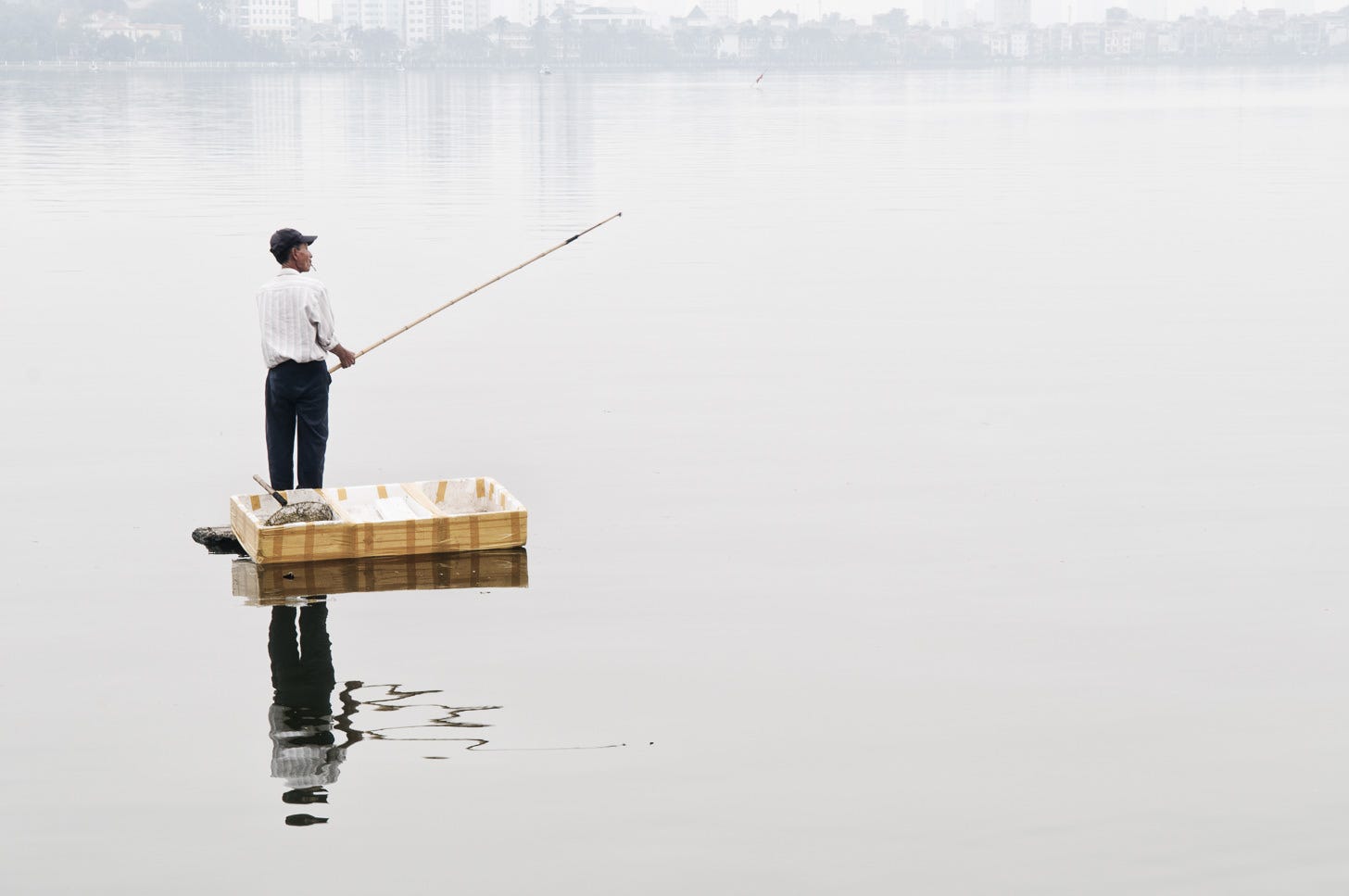
Lots of housekeeping in my rather large image archive lately. But the fun part is that that also means rediscovering some old shots. I’ve posted a handful of them here.
Fun to Know: There Are 12 Hasselblad Cameras Currently Sitting on the Moon
When the Apollo astronauts landed on the moon, they used heavily modified Hasselblad 500EL cameras. But when it was time to come home, NASA was strictly limited by weight. To make room for the 55 pounds of moon rocks they were bringing back, the astronauts detached the film magazines and jettisoned the camera bodies onto the lunar surface.